HoustonSuperior Epoxy

Houston, TX & Greater Houston

Premium Garage Floor Coatings in Houston, TX

Ground to bare concrete. Finished like furniture.

Transform damaged, stained, or unfinished concrete with a professionally installed full-broadcast flake floor designed for Houston homes, garages, workshops, and commercial spaces.

  • $2M general liability + workers’ comp
  • 5-year workmanship warranty
  • No upfront payment
Loose vinyl flake chips in a charcoal, orange, bone and grey blend, photographed as a material sample against a dark surface.
Material sampleVinyl flake blend — not a photograph of a completed floor

What goes on your slab

Four layers, bottom to top

  1. 04Polyaspartic F61 clear topcoat

    Aliphatic, UV stable. This is the wearing surface.

  2. 03Vinyl flake, broadcast to refusal

    Scraped and vacuumed even. Texture comes from the flake edges.

  3. 02Citadel SLE-100 epoxy base coat

    Build and bond into the open concrete profile.

  4. 01Diamond-ground concrete

    Mechanical profile. Not acid etch, not a pressure wash.

Credentials and terms

Years in business
7
Projects completed
100+
Liability + workers’ comp
$2M
Written workmanship warranty
5-Year
Due upfront
$0
Residential & commercial
Res. + Com.

Insurance certificates and a sample warranty are available on request.

Who installs garage floor coatings in Houston?

Short answer

Houston Superior Epoxy is a garage floor coating contractor serving the Houston metro, and the epoxy and concrete coatings division of Houston Superior Painting. We diamond grind the slab, repair cracks and spalls, then install epoxy and polyaspartic systems in garages, patios, shops and commercial buildings. Every quote follows an onsite inspection of your own concrete.

Professional recommendation

Judge a coating company on how it talks about your slab, not on the resin it sells. Preparation is where these floors are won or lost, and it is the first thing cut when a price looks too good.

Choose it when
You want the floor inspected before it is quoted, the concrete mechanically ground rather than acid etched, and the number you are given in writing.
Look elsewhere when
You need the cheapest possible surface change and do not mind redoing it. A rolled-on coating over unprepared concrete costs less today and comes up in sheets later.

Houston Superior Epoxy

Signature Installation System

Nine steps, in this order, on every slab

Preparation is the part of the job that decides whether a coating holds. This is the sequence we run residential and commercial, with no steps traded away to hit a price.

  1. Inspect the concrete and identify cracks, damage, contamination, and moisture concerns

  2. Mechanically prepare the concrete with professional diamond grinding

  3. Vacuum dust using professional dust-control equipment

  4. Repair eligible cracks, spalls, and surface imperfections

  5. Apply Citadel SLE-100 epoxy base coat when appropriate for the selected system

  6. Broadcast decorative flakes to full refusal for full coverage

  7. Scrape and vacuum loose flakes to create an even texture

  8. Apply Polyaspartic F61 clear topcoat when appropriate for the system

  9. Final quality inspection and care instructions

Diamond grinding is our preparation method. Steps 5 and 8 are specified when appropriate for the selected system — substrate conditions sometimes require a different build.

The Differentiator

Why professional preparation matters

This is the part of the job you will never see once the floor is finished, and it is the part that decides whether the floor is still there in five years. It is also the first thing a low bid removes. Here is the actual engineering, without the adjectives.

Adhesion is mechanical, not magical

A floor coating is held down by resin locking into the open pore structure of the concrete. A power-troweled slab is closed at the surface and usually carries laitance — a weak, dusty layer of fines brought up during finishing. Coat over it and the resin bonds to the laitance instead of the concrete, so the floor can peel off in sheets while the coating film itself is still perfectly intact.

Concrete surface profile is a specification

The industry measures surface roughness on the ICRI concrete surface profile scale, and coating manufacturers name a target profile in their technical data sheets. Diamond grinding is how that profile gets produced repeatably. Acid etching and pressure washing clean a slab but do not reliably open it to a specified profile, which is why we do not use them as our preparation method.

Cracks get treated, not bridged

Cracks are repaired as their own step before any coating goes down. Part of the inspection is judging whether a crack is dormant or still moving, because a moving crack telegraphs straight back through a coating that was simply filmed over it. Control and expansion joints are handled deliberately rather than buried, since a joint exists to let the slab move.

Moisture gets evaluated before anything is quoted

Concrete on grade can drive water vapor upward from the soil below, and a coating that seals a slab pushing vapor can blister osmotically from underneath. The recognised test methods are ASTM F1869 (anhydrous calcium chloride) and ASTM F2170 (in-situ relative humidity probes). We look for moisture indicators during the inspection so the specification accounts for it, instead of discovering it after the floor is down.

UV stability is a chemistry question

Standard epoxy resins are aromatic, and aromatic chemistry ambers and chalks under sustained ultraviolet exposure — a well-documented property, not a defect. Aliphatic chemistries such as polyaspartics and aliphatic urethanes are the UV-stable option, which is why the topcoat matters far more than the base coat on any slab that sees daylight.

Chemical resistance belongs to the topcoat

What a finished floor tolerates — brake fluid, road salt, battery acid, pool chemicals, degreasers — is a property of the topcoat chemistry and the specific reagent and dwell time, not of "epoxy" in general. We specify from the manufacturer's current resistance data for the system going on your slab rather than publishing a blanket rating, and we tell you what the floor is not rated for.

Hot-tire pickup is a bond failure

When a tire comes home hot from a Houston summer drive, it softens the coating at the contact patch and lifts it as the car cools and the rubber grips. The reason it lifts is almost always inadequate bond to the concrete or a coating driven into service before it reached full cure — not a coating that was insufficiently hard. Adequate profile, a fully cured system and a topcoat appropriate to vehicle traffic are what prevent it.

Slip resistance is a choice you make

A full-broadcast flake floor already has texture from the flake edges under the clear coat. Where more is needed — patios, pool decks, wash bays, commercial walkways — aluminium oxide or polymer grit can be suspended in the topcoat. This is a real tradeoff: more aggressive texture is more secure underfoot and harder to mop, and slip resistance is measured as DCOF under ANSI A326.3 rather than described with adjectives.

Preparation is what sets service life

The failure interface on nearly every peeling floor we strip out is between the coating and the concrete, not inside the coating film. That means the resin can never outperform the bond underneath it, and preparation is the one variable a low bid removes first because it is invisible in the finished floor. It is also the variable we will not trade away, which is the honest reason our number is rarely the cheapest one you receive.

None of the above is proprietary. It is documented industry practice that a properly equipped installer can follow and an underequipped one cannot, which is why we publish it instead of claiming a secret system. What we will not publish are adhesion, cure or chemical-resistance figures — those come from the manufacturer's current technical data sheet for the exact system going on your slab, and we will show you that sheet.

Finishes We Install

The finishes we install

Our own project photography is still being shot, so the six frames below are labelled illustrations of the finishes and the space types we work in — not photographs of our work. Every image on this site falls into one of three clearly marked categories: a real project photograph, a labelled illustration like these, or an empty slot saying what belongs in it. What you will not find is stock photography, or a generated image passed off as a floor we installed.

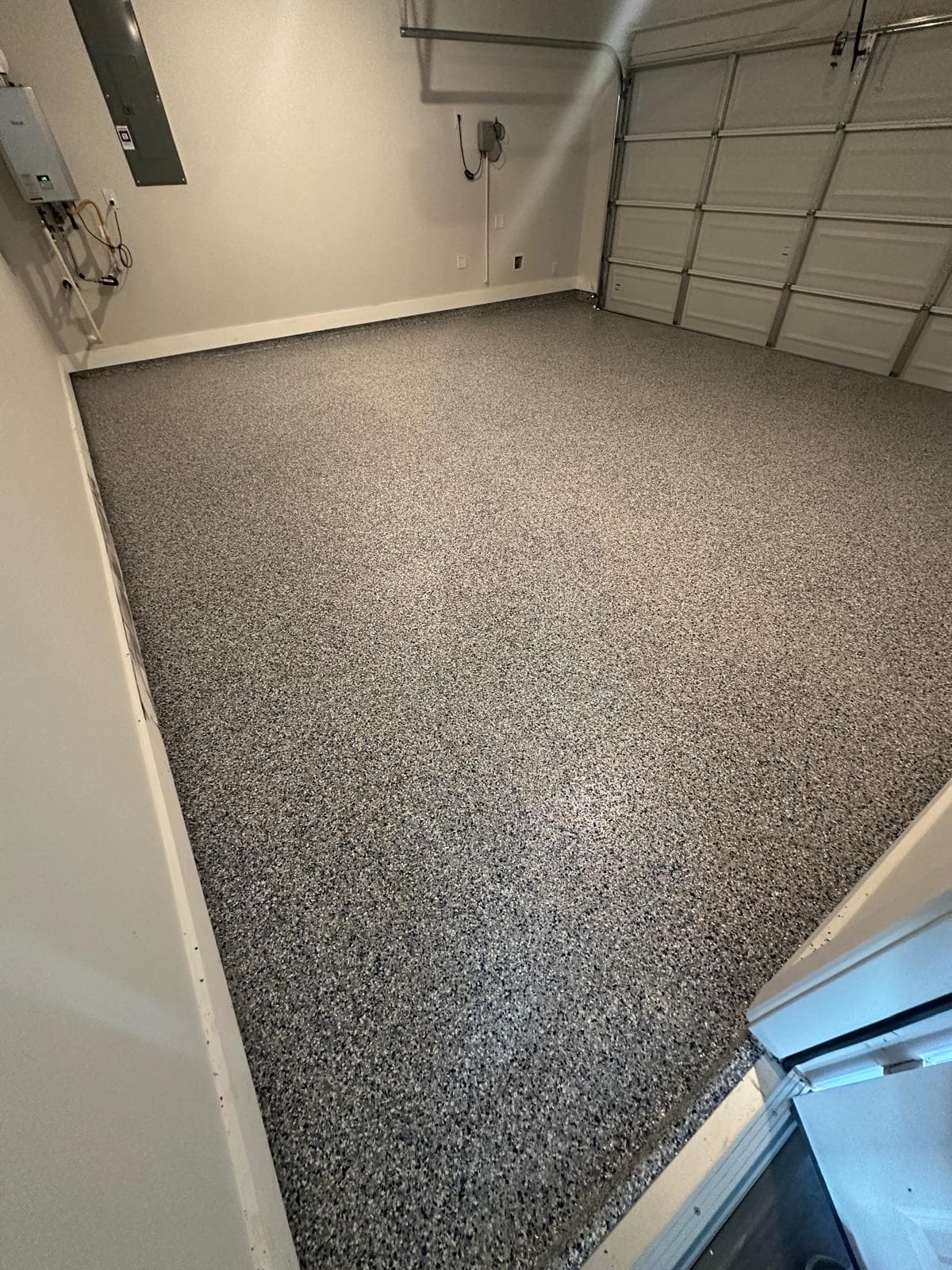
  • Illustration of a finished residential garage floor: an empty two-car garage with a full-broadcast vinyl flake floor in charcoal, rust and cream under a high-gloss topcoat, coved up the base of the stem walls, with a closed sectional garage door beyond.
    IllustrationIllustration of a finished flake garage floor — not a photograph of our work
    Illustration · not our workResidential garage · full-broadcast flakePhotography planned: before and after, same camera position
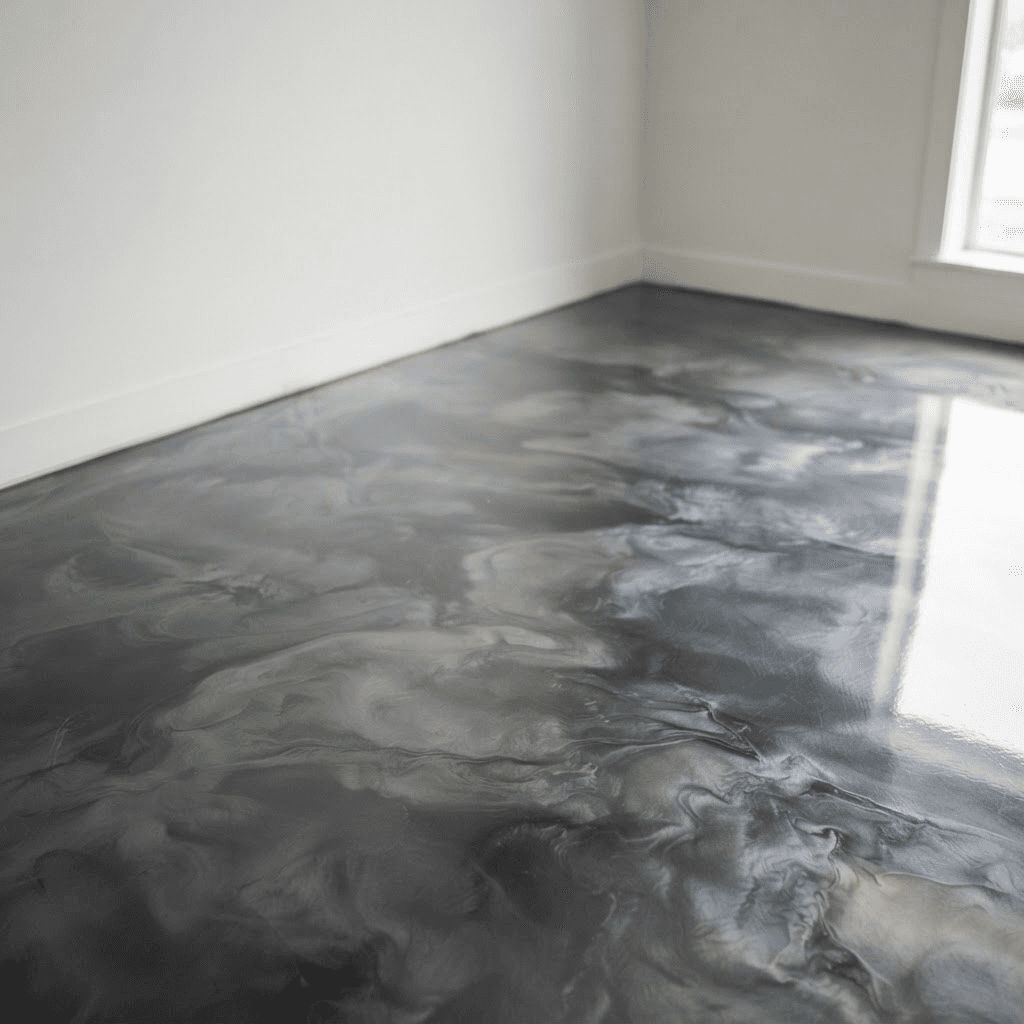
  • Illustration of a finished metallic epoxy floor: an empty plain white room with a seamless poured metallic floor in charcoal and pewter with silver-grey marbled veining and a mirror-like gloss reflecting a tall window.
    IllustrationIllustration of a metallic pour — not a photograph of our work
    Illustration · not our workMetallic epoxy · interior feature floorPhotography planned: finished floor detail
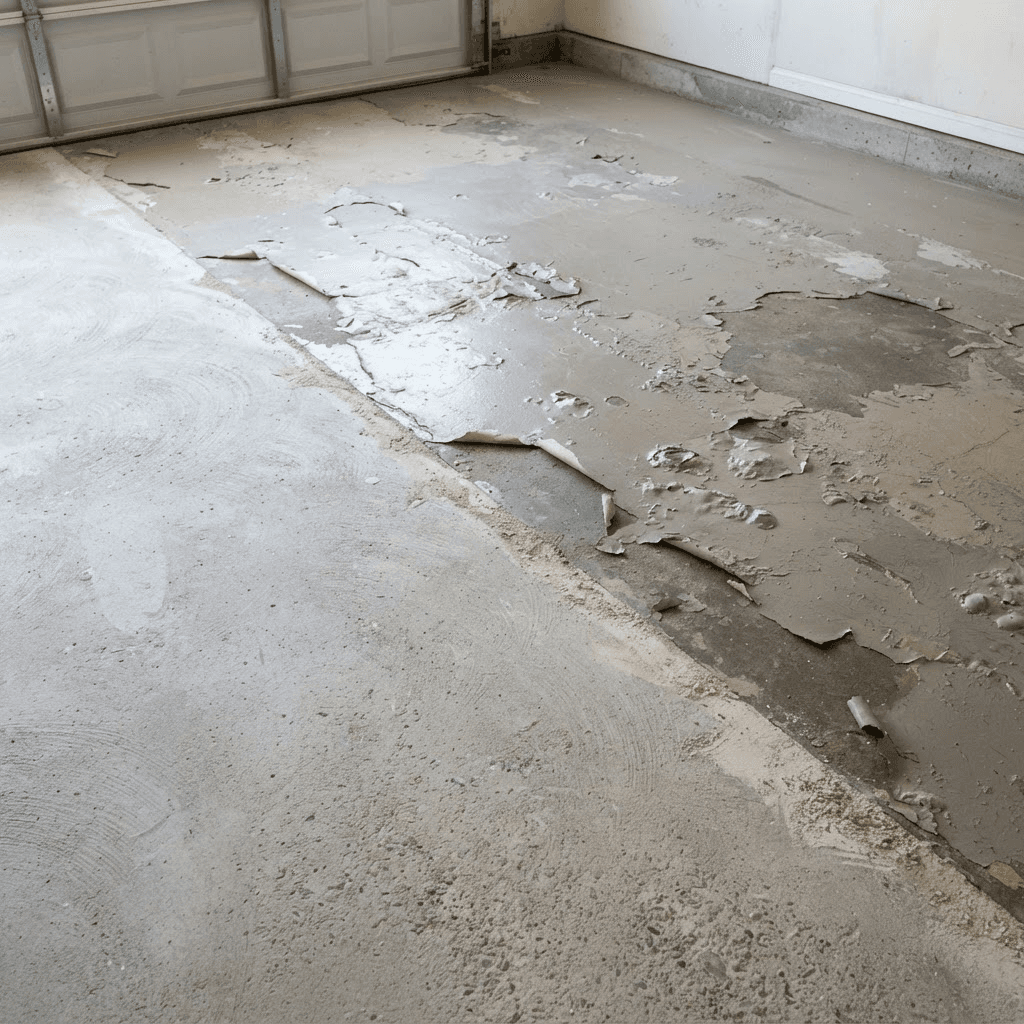
  • Illustration of coating removal in progress: a garage slab split diagonally, with an old grey-beige coating visibly blistered and peeling away in curling flakes on one side, and bare freshly ground concrete showing faint grinder swirls on the other.
    IllustrationIllustration of removal in progress — old coating one side, stripped slab the other
    Illustration · not our workFailed coating · removal and resurfacePhotography planned: peeling floor, stripped slab, finished floor
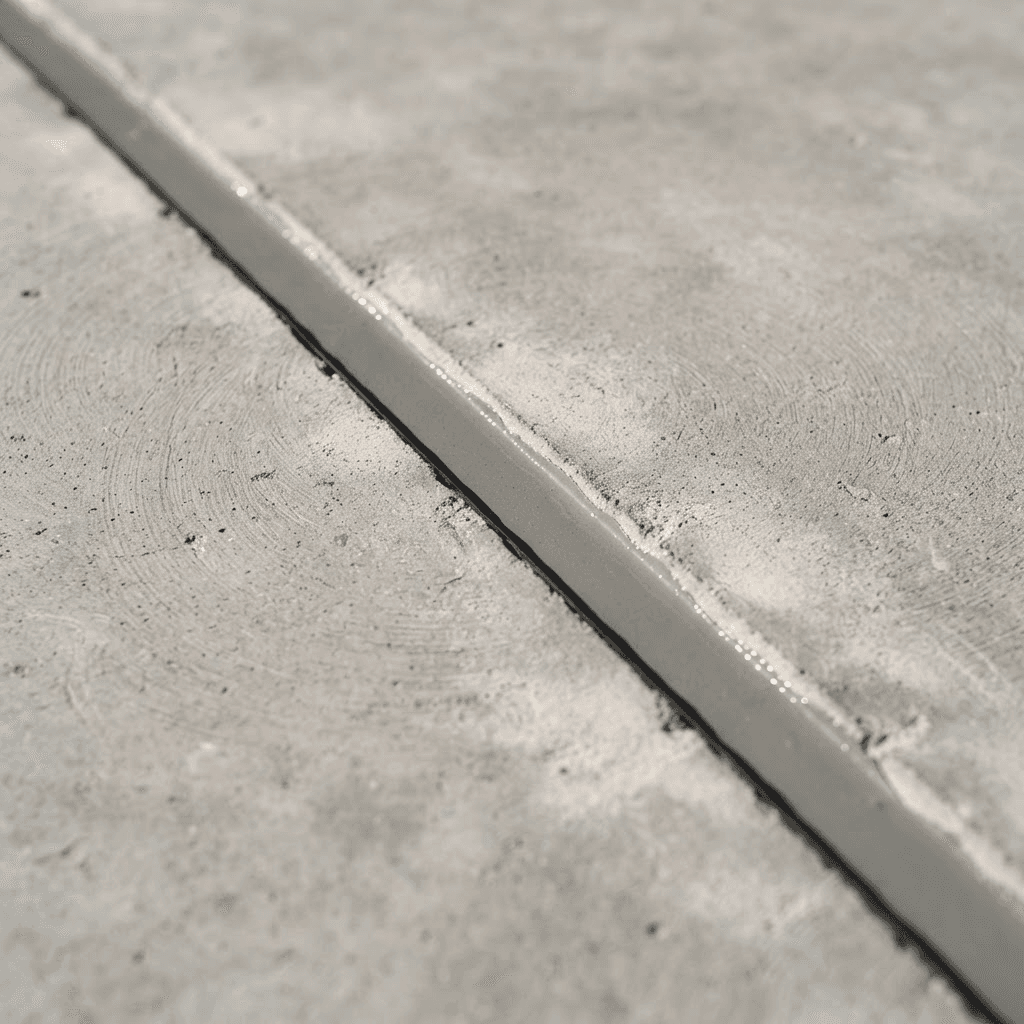
  • Illustration of a crack repair: a close-up of a concrete slab where a crack has been cut open into a clean-edged V-groove roughly an inch wide and filled with grey polyurea sitting slightly proud of the surrounding ground concrete, before flush grinding.
    IllustrationIllustration of a chased and filled crack, before flush grinding
    Illustration · not our workCrack repair · chased, filled, ground flushPhotography planned: open crack, filled groove, finished floor
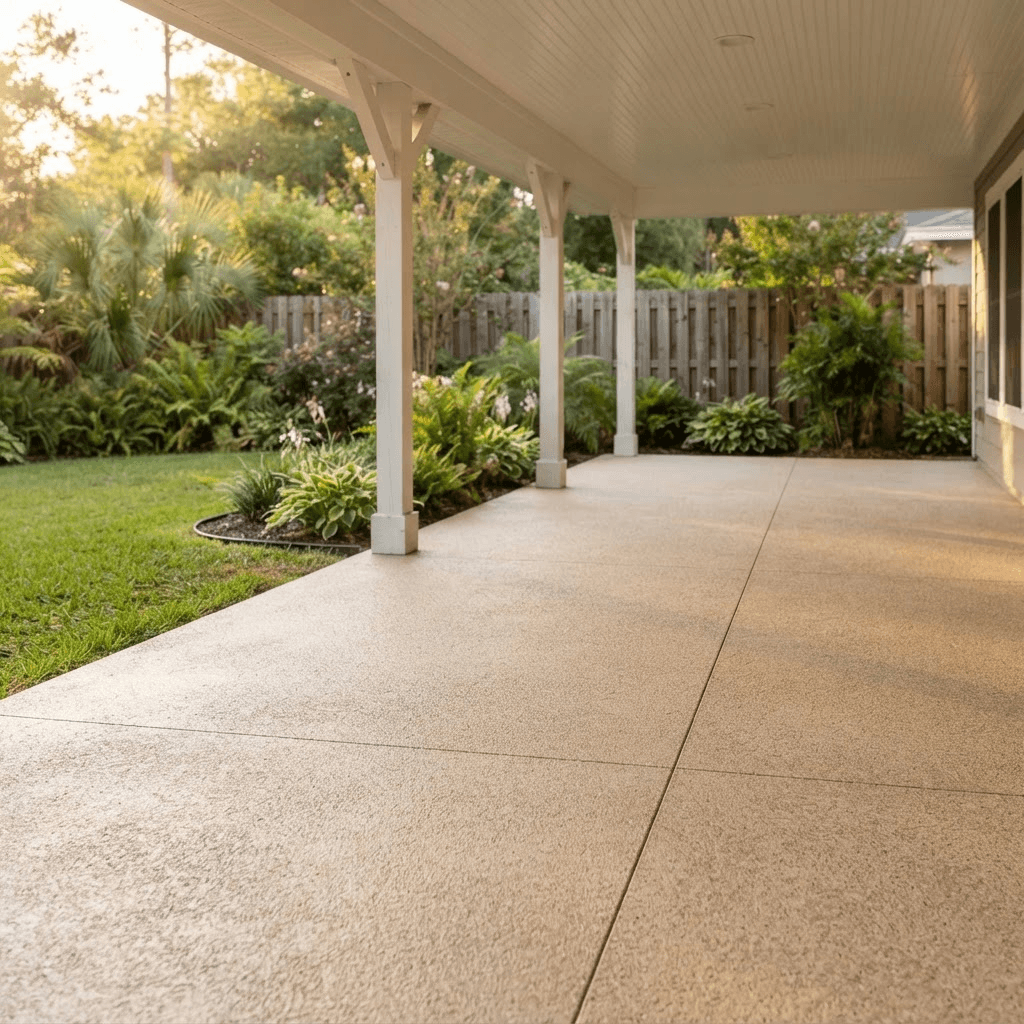
  • Illustration of a finished patio coating: an empty covered residential patio with a matte, lightly textured sand-beige decorative concrete surface running out to a lawn and a wooden fence, lit by low warm afternoon daylight that reveals the slip-resistant texture.
    IllustrationIllustration of a textured exterior finish — not a photograph of our work
    Illustration · not our workPatio & pool deck · textured finishPhotography planned: before and after, same camera position
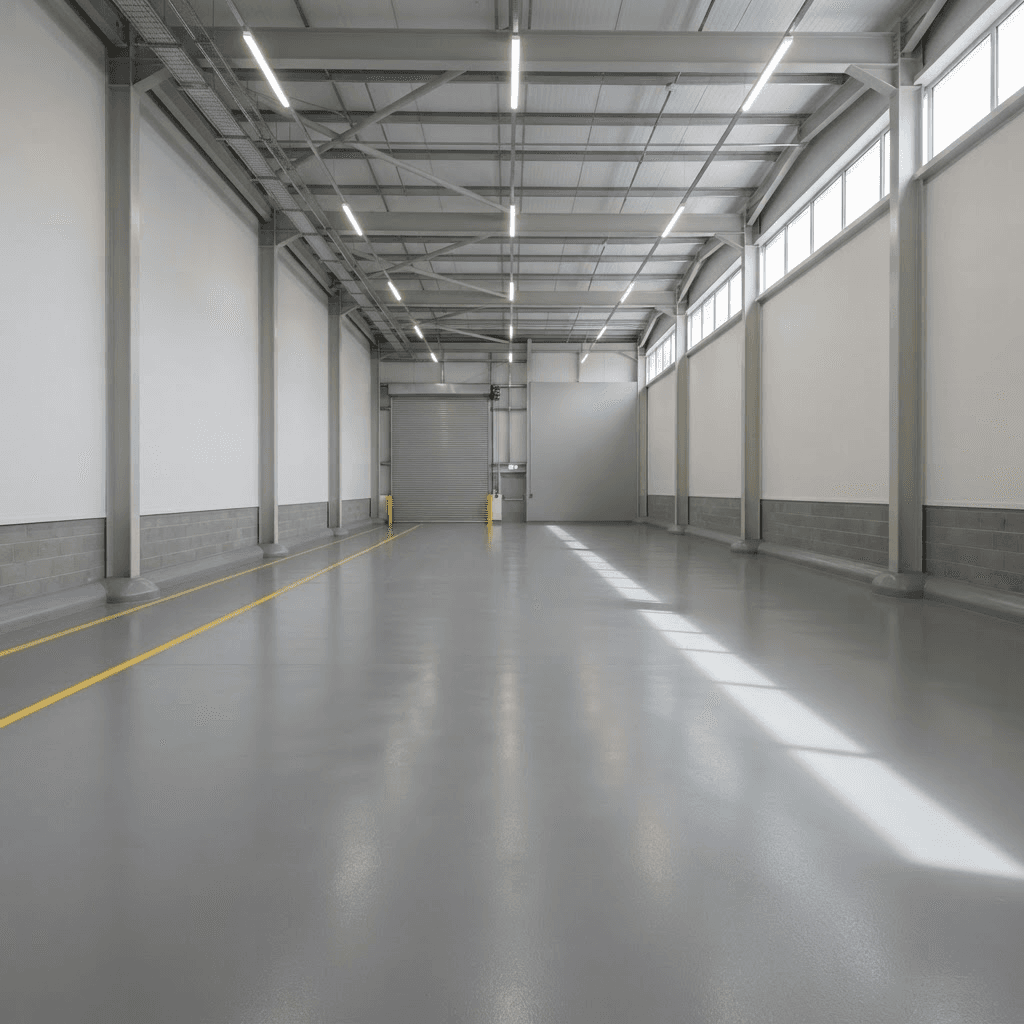
  • Illustration of a finished commercial floor: an empty light-industrial warehouse bay with a seamless mid-grey industrial epoxy floor at a satin sheen, yellow safety walkway lines along one side, and daylight from high clerestory windows.
    IllustrationIllustration of a finished commercial floor — not a photograph of our work
    Illustration · not our workCommercial shop floor · phased installPhotography planned: before and after, same camera position

Our project archive is being built

We are photographing completed floors properly rather than filling this page with stock images, or with generated pictures passed off as jobs we did. Anything on this site that is an illustration rather than a photograph is labelled as one. Until the archive is up, the fastest way to judge our workmanship is to ask for local references, or to read the reviews left by the homeowners whose floors we have already installed.

See photos on Google

View the full project archive →

Pricing

Where pricing starts, and what moves it

Two quotes on the same garage can describe completely different work, so a single number would tell you very little on its own. Rather than advertise a figure that may not survive contact with your slab, here is every variable that decides what your floor costs — and what the quote itself guarantees.

Slab condition drives cost more than square footage does. Whether an existing coating has to come off, how much crack and spall repair the floor needs, slab moisture and the system you choose all move the figure, and the only way to know by how much is to look at the concrete. The onsite inspection that produces your actual number is free, and the quote is itemized in writing with no payment due upfront.

The ten variables in every quote

  1. Square footage & layout

    Total area sets the material and labor baseline. Tight, cut-up spaces take longer per foot than open slabs.

  2. Existing coating removal

    A previously coated or sealed slab has to be stripped back mechanically before new work starts. This is often the single largest variable.

  3. Concrete condition

    Cracks, spalls, pitting and past patchwork are repaired as their own step. More repair means more time before coating.

  4. Moisture conditions

    Slabs that push vapor are handled differently than dry slabs. We check for moisture during the inspection, not after.

  5. Coating system chosen

    Flake, metallic, quartz and solid color are not the same amount of material or labor.

  6. Flake & color selection

    Blend and coverage choices affect material cost and how many passes the install takes.

  7. Vertical stem walls

    Coating up the stem walls or curbs adds detail work and cut-in time beyond the floor area.

  8. Number of coats

    The system and the substrate together determine how many coats the floor needs.

  9. Indoor vs exterior exposure

    Exterior slabs face sun and water, which changes the specification and the surface texture.

  10. Access & scheduling

    Stairs, tight entries, occupied buildings and after-hours or weekend work all affect labor.

The onsite estimate is free, itemized in writing, and carries no upfront payment.

Full pricing breakdown →

Call Houston Superior Epoxy at (346) 782-0903 to schedule an onsite estimate.

Reviews

Read our Google reviews

Houston Superior Epoxy is the concrete coatings division of Houston Superior Painting, an established Houston painting contractor. Our coatings work is reviewed on its own Google Business Profile — unedited and in full, including anything less than glowing.

Service Area

Where we work, and why it changes the job

We are a service-area business — there is no showroom, we come to your slab. Soil and construction era vary enough across Greater Houston that each of these areas gets its own page rather than a template with the city name swapped out.

Also serving

Houston · Memorial · River Oaks · The Heights · Bellaire · Spring · Tomball · Missouri City

These communities are covered but do not have a dedicated page yet — a city only gets one when we can write something about its slabs that is not true everywhere else.

All service areas

Questions

Eighteen questions we get before every job

Answered directly, in the first sentence, with no figures we cannot support. Where the honest answer is “it depends on your slab,” we say that and explain what we are looking at.

How much does a two-car garage floor coating cost in Houston?

Cost is driven by four things, and slab condition matters more than square footage. First, whether an existing coating has to be ground off — that is the single largest swing. Second, crack and spall repair, which is quoted as its own line because scope varies enormously between floors. Third, slab moisture, which can change which system will bond reliably. Fourth, the system itself: a solid colour, a full flake broadcast and a metallic finish are different amounts of material and labour. We inspect the slab, itemize all of it in writing, and take no payment upfront.

How long does the installation take?

Most residential garages are an install measured in days rather than weeks, and you get a specific schedule with your itemized quote. What moves it is slab size, how much crack and spall repair the concrete needs, whether an old coating has to come off first, and the system being installed. We commit to the schedule after the inspection rather than guessing over the phone.

When can I walk on it and when can I park on it?

Foot traffic returns before vehicle traffic, and vehicle traffic is the one worth waiting for. The exact return-to-service times are set by the manufacturer's current technical data sheet for the system installed and by the temperature and humidity during cure, so we give you the specific hours in writing at the final walkthrough instead of publishing a number here that might not apply to your floor. Driving on a coating before full cure is one of the most common causes of hot-tire pickup.

Epoxy or polyaspartic — which is right for a Houston garage?

For most Houston garages the answer is both, in layers: an epoxy base coat for build and bond into the ground concrete, and a polyaspartic clear topcoat for the wearing surface. They are not competitors so much as different jobs. Polyaspartic is aliphatic and therefore UV stable, and it cures fast enough to be workable in a wide temperature window; epoxy is aromatic and will amber in sunlight, which is exactly why it belongs underneath rather than on top.

Will the floor be slippery when it gets wet?

A full-broadcast flake floor has meaningful texture built in, because the flake edges sit under the clear coat rather than being smoothed flat. Where you want more grip — a patio, a pool deck, a wash bay — we can suspend aluminium oxide or polymer grit in the topcoat. It is a genuine tradeoff to decide before install: more texture is more secure underfoot and harder to mop clean.

How do you prepare the concrete?

We mechanically prepare every slab with professional diamond grinding and capture the dust with dust-control equipment. Grinding removes laitance and the closed, troweled surface, and opens the concrete to a profile the coating can lock into. Acid etching is not our preparation method.

Can you coat a cracked concrete floor?

Usually yes — cracks are repaired as a separate step before any coating goes down, never coated over. During the inspection we judge whether each crack is dormant or still moving, because an active crack will telegraph back through a coating that was simply filled and filmed. Houston clay soils mean seasonal slab movement is normal here, and control joints are treated deliberately rather than buried.

Can you remove an old peeling coating?

Yes, and on a failing floor that is the only honest starting point. Failed coating is removed mechanically back to sound concrete, the slab is then re-profiled and repaired, and the new system goes down on bare concrete. Removal is often the single largest variable in a quote, which is why we want to see the floor before pricing it.

Can you apply epoxy over self-leveling concrete or an overlay?

Sometimes, but it depends entirely on what the overlay is and how well it is bonded to the slab beneath it. A coating cannot be stronger than what it is stuck to, so a self-leveler that is hollow-sounding, chalky or delaminating has to come off rather than be coated. We sound and test the overlay during the inspection and tell you plainly if it needs to go.

Does Houston humidity affect the installation?

Yes, in two separate ways. Ambient humidity and dew point affect how coatings cure and can cause blush or cloudiness if a system is installed outside its window, and separately, moisture driving up through a slab on grade can blister a coating from underneath. We work to the manufacturer's stated conditions for the system and check the slab for moisture indicators during the inspection, before quoting.

What actually causes a garage floor coating to peel?

Inadequate bond to the concrete, in the large majority of cases. When we strip a failed floor, the separation is almost always between the coating and the slab rather than inside the coating film — the signature of a surface that was never mechanically opened, or was coated over laitance, an old sealer or moisture. Driving on a coating before it reaches full cure is the other common cause.

What is a full-broadcast flake system?

It means vinyl flake is broadcast into the wet base coat until the surface will not accept any more — broadcast to refusal — rather than scattered thinly for looks. The loose flake is then scraped and vacuumed to an even texture and locked under a clear polyaspartic topcoat. Full coverage hides slab imperfections, adds texture underfoot, and produces a consistent surface instead of visible bare patches between flakes.

How long will the floor last?

Our workmanship carries a written 5-year warranty. Beyond that, honest service life depends on preparation quality, the system specified, and how the floor is used — a lightly used residential garage and a forklift aisle are not the same question, and we would rather point you at the warranty we actually stand behind than publish a lifespan figure we cannot support. What we can tell you is that preparation, not the resin, is what determines it.

Do you coat patios and outdoor kitchens?

Yes, and exterior slabs are assessed separately from garages. Sun exposure makes a UV-stable aliphatic topcoat essential rather than optional, standing water and pool chemicals change the specification, and slip resistance usually needs to be increased with aggregate in the topcoat. Drainage and how the slab was originally poured matter more outdoors than in.

Do you take commercial and warehouse work?

Yes. Commercial installs are phased around your operating hours — including nights and weekends — so the space stays usable, and larger slabs bring their own considerations like joint detail, forklift traffic and line striping. We carry $2M general liability plus workers' compensation and can provide certificates of insurance for your facility requirements on request.

How do I clean the finished floor?

A dust mop and a damp mop with a pH-neutral cleaner handles routine cleaning; a coated floor is far easier to maintain than bare concrete because there is no open pore structure to absorb oil. Avoid the things that dull or attack a coating: harsh solvents, acidic cleaners and abrasive pads. You get written care instructions specific to your system at the final walkthrough.

Are estimates really free?

Yes — the onsite estimate is free, itemized in writing, and carries no obligation and no upfront payment. We come to your slab, inspect the concrete, check for moisture and repair needs, and go through flake and colour samples under your own lighting. Quoting a floor without seeing it is how surprises end up on invoices.

Which Houston areas do you serve?

We are a service-area business covering Greater Houston, including Houston, Richmond, Katy, Cypress, Sugar Land, The Woodlands, Memorial, River Oaks and surrounding communities. There is no showroom to visit — we come to your concrete. Estimates are free everywhere we serve.

Ready to Transform Your Concrete?

Schedule a free onsite assessment and receive a professional recommendation based on your concrete, project goals, and preferred finish.

  • $2M general liability + workers’ comp
  • 5-year workmanship warranty
  • No upfront payment
Call nowFree estimate